
Netflix’s upcoming adaptation of Lord of the Flies is clearly aiming for something far more immersive and physically intense than a traditional survival drama.
In a recent interview, production designer Simon Walker explained how the series used the Malaysian jungle itself as a major storytelling tool, helping shape the atmosphere, tension, and gradual collapse of civilization throughout the four-episode adaptation.
According to Walker, Malaysia was chosen because it offered dense, authentic jungle terrain that immediately felt isolated, oppressive, and dangerous. The production also benefited from strong local infrastructure, allowing the crew to build large practical sets deep inside the environment while still maintaining the illusion of complete remoteness.
Honestly, the approach sounds incredibly ambitious.
The Jungle Was Treated Like a Character
One of the most interesting details from the interview is how seriously the production treated the jungle environment itself.
Walker explained that the heat, humidity, tangled vegetation, insects, and overwhelming density of the landscape were all intentionally used to reinforce the boys’ emotional and psychological breakdown as the story progresses.
Rather than simply functioning as background scenery, the jungle constantly pressures the characters physically and mentally.
The crew reportedly had to build hidden pathways and carefully conceal modern equipment so the island would feel untouched and primitive on screen. That realism was especially important because the series wants audiences to feel trapped alongside the characters instead of watching a polished survival fantasy.
The Camp Design Changes as Civilization Collapses
Walker also revealed that the camp layouts were designed to visually track the boys’ descent into chaos.
Early in the story, the crash site and shelters appear more organized and structured. The wreckage of the plane still carries traces of civilization, and the boys initially attempt to create systems and routines around survival.
But as tensions grow, the environment slowly changes too.
The camps reportedly become dirtier, more cluttered, and increasingly improvised over time. Materials pulled from the crashed plane are reused for tools, sails, weapons, and shelter pieces, giving the sets a rough scavenged appearance that reflects the group’s moral deterioration.
Even smaller details were carefully planned.
Walker explained that things like food storage, tent placement, fire pits, and tribal markings all evolve visually throughout the season to show the breakdown of social order without relying entirely on dialogue.
Honestly, that kind of environmental storytelling usually works best in survival dramas because audiences subconsciously notice the decay happening around the characters.
The Harsh Conditions Apparently Helped the Performances
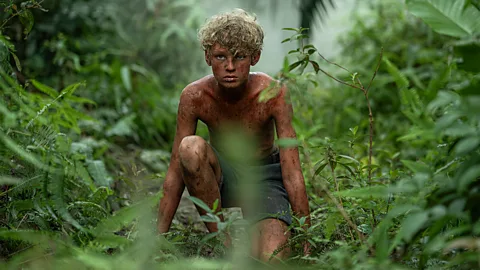
The production designer also spoke about how physically demanding the Malaysian jungle became for the cast, especially the younger actors.
High temperatures, insects, and exhausting conditions reportedly made filming extremely challenging. However, Walker argued that the discomfort actually helped the performances feel more raw and believable because the actors were genuinely dealing with environmental stress while filming intense scenes.
At the same time, the production built separate off-set safe zones where the young cast could rest between takes.
The actual beach and camp locations, though, were kept as immersive and uninterrupted as possible to preserve the series’ claustrophobic tone.
Netflix Wants This Version to Feel Modern but Faithful
According to Walker, the goal was never to completely reinvent Lord of the Flies.
Instead, the production wanted to make the story feel contemporary and emotionally immediate while still honoring the core themes of William Golding’s novel: how quickly order, morality, and civilization can disappear once structure and authority collapse.
The Malaysian jungle, the practical survival camps, and the increasingly hostile environment all appear designed to reinforce that central idea visually.
Walker also described the project as one of the most difficult and rewarding experiences of his career because of the scale of the locations, the complexity of the production, and the pressure that comes with adapting such a legendary story.
And honestly, based on everything revealed so far, Netflix’s version of Lord of the Flies sounds far more physically immersive and psychologically intense than many fans probably expected.
New on Netflix covers the latest Netflix releases, reviews, and streaming updates with a clear, independent voice. This publication is not affiliated with Netflix or its parent company.